
Python automation courses cost money and time. Both are finite resources. Before investing either, you want to know: will the return justify the investment? Not vague promises about “valuable skills” — actual calculation of whether this makes financial sense.
This guide provides that calculation framework. Real costs, measurable returns, break-even analysis, and honest assessment of when Python automation courses are worth it — and when they’re not. For Canadian learners evaluating options, this guide to Python automation courses in Canada covers regional pricing and programs.
The True Cost (Not Just Tuition)
Course price is the obvious cost. The complete investment includes more:
Direct Costs
Course tuition: $50-5000+ depending on format. Online self-paced courses cluster around $100-500. Live courses and bootcamps range $500-5000+.
Software/tools: Usually minimal. Python is free. Most tools used in automation courses are free or have free tiers. Budget $0-100 for any premium tools needed.
Books/supplementary materials: Optional but helpful. $0-100 depending on preferences.
Total direct cost range: $50-5200
Time Costs
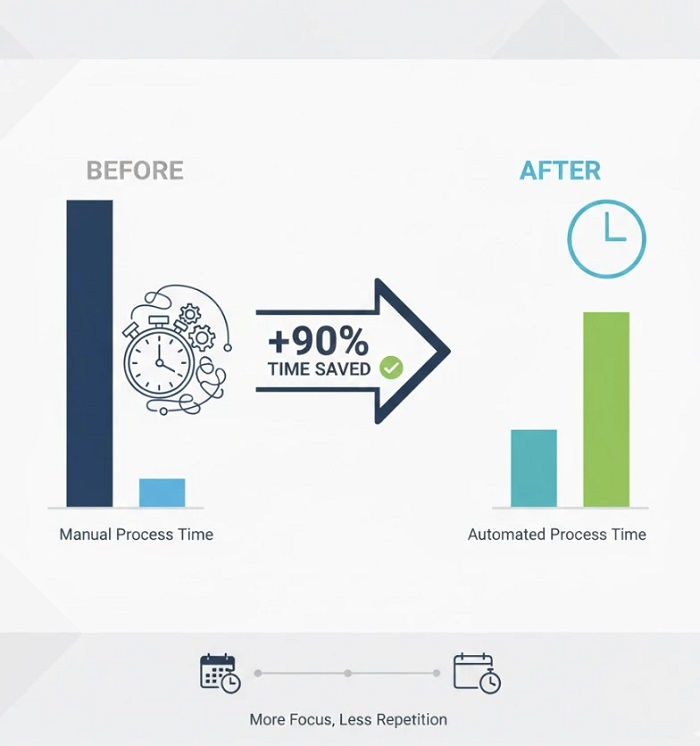
Learning hours: Quality courses require 60-150 hours total. At minimum wage ($15/hour), that’s $900-2250 in time value. At professional rates ($30-75/hour), it’s $1800-11,250.
Practice hours: Effective learning requires practice beyond course hours. Add 50-100% more time for exercises and real application.
Opportunity cost: Hours spent learning could be spent working, resting, or on other development. This cost is real even if not monetary.
Hidden Costs
Failed attempts: If you don’t complete the course, you’ve paid the cost without gaining the value. Completion probability matters for true ROI calculation.
Learning curve productivity dip: Early automation attempts take longer than manual work. You invest time building skills before they pay returns.
Total realistic investment: $1000-15000 in combined money and time value for a typical working professional.
The Measurable Returns
Now the other side of the equation — what you get back:
Time Savings
The most immediate, measurable return. Examples from typical automations:
Weekly report generation: Manual: 3 hours. Automated: 5 minutes. Weekly savings: 2.9 hours. Annual savings: 150 hours.
Data entry/transfer: Manual: 2 hours weekly. Automated: 10 minutes. Weekly savings: 1.8 hours. Annual savings: 94 hours.
File organization: Manual: 1 hour weekly. Automated: instant. Annual savings: 52 hours.
Data cleaning: Manual: 4 hours monthly. Automated: 15 minutes. Annual savings: 45 hours.
Email processing: Manual: 30 minutes daily. Partially automated: 10 minutes. Annual savings: 87 hours.
A professional with several automatable tasks can realistically save 200-400 hours annually. At $30-75/hour professional value, that’s $6,000-30,000 in annual time value.
Career Value
Harder to quantify but significant:
Salary premium: Professionals with Python automation skills command 10-25% higher salaries in many fields. On a $60,000 salary, that’s $6,000-15,000 annually.
Promotion potential: Automation skills often accelerate advancement. The value of earlier promotion compounds over career years.
Job security: Employees who automate are harder to replace and less likely to be automated themselves.
Career flexibility: Skills transfer across industries and roles. More options mean better negotiating position.
Quality Improvements
Value beyond pure time savings:
Reduced errors: Automated processes don’t make tired mistakes. Fewer errors mean less time fixing problems and better outcomes.
Consistency: Automations perform identically every time. Consistent outputs improve reliability and trust.
Scalability: Manual processes scale linearly with volume. Automations handle 10x volume with minimal additional effort.
The Break-Even Calculation

When does investment become profit?
Conservative Scenario
Course investment: $500 + 100 hours ($3,000 time value) = $3,500 total
Annual time savings: 150 hours × $30/hour = $4,500
Break-even: 9 months
5-year return: $22,500 – $3,500 = $19,000 net value
Moderate Scenario
Course investment: $1,000 + 120 hours ($6,000 time value) = $7,000 total
Annual time savings: 250 hours × $50/hour = $12,500
Break-even: 7 months
5-year return: $62,500 – $7,000 = $55,500 net value
Including Career Premium
Adding even modest salary improvement changes calculations dramatically:
10% salary increase on $60,000: $6,000 additional annual income
Combined with time savings: $6,000 + $4,500 = $10,500 annual return
Break-even: 4 months
5-year return: $52,500 – $3,500 = $49,000 net value
When Python Automation Courses Are Worth It
The ROI is clearly positive when:
You have repetitive data tasks. More repetition means more automation opportunity. If you spend 5+ hours weekly on automatable tasks, the math works strongly.
Your time has professional value. Higher hourly rates mean faster break-even. At $50+/hour, even modest time savings justify significant course investment.
You’ll actually complete the course. ROI calculations assume completion. If you have history of abandoning courses, factor in completion probability.
You’ll apply the skills. Learning without application returns nothing. Commitment to implementation is necessary for return.
Career advancement matters to you. If salary growth and promotion are goals, the career value component strengthens ROI substantially.
When Courses Might Not Be Worth It
Honest assessment of negative ROI scenarios:
No repetitive tasks. Without tasks to automate, skills don’t produce time savings. The career value alone may not justify investment.
Low completion probability. If previous self-improvement attempts failed, another course might produce the same result. Address completion barriers before investing.
Time-rich, money-poor situations. If your time isn’t monetized (student, unemployed, retired), time savings don’t translate to financial return. Other motivations may still justify learning, but ROI calculation changes.
Job doesn’t allow automation. Some environments restrict what software employees can use. Automation skills without ability to apply them don’t return value.
Purely credential-seeking. If you want the certificate without applying skills, the ROI comes only from credential value — often insufficient alone.
Maximizing Your ROI
Strategies to improve return on course investment:
Choose Courses Strategically
Automation-specific over general. Focused courses produce applicable skills faster. General Python courses include content you won’t use for automation.
Practical over theoretical. Courses emphasizing projects over concepts produce usable skills sooner. Theory without application doesn’t return value.
Appropriate level. Courses too basic waste time on known material. Courses too advanced create frustration and abandonment risk. Match course level to current skills.
Apply Immediately
Automate during learning. Don’t wait until course completion. Build automations for real tasks while learning. Returns begin immediately.
Start with highest-impact tasks. Automate your most time-consuming repetitive work first. Prioritizing impact accelerates payback.
Document everything. Automations you can reuse multiply returns. Documentation makes reuse possible.
Leverage Career Value
Make skills visible. Share automation successes with managers. Visibility connects skills to advancement opportunities.
Update resume/LinkedIn. Documented skills attract opportunities. Career value requires discoverability.
Negotiate based on value. When automations save your organization money, you have leverage for raises or promotions.
The Compound Effect
ROI calculations often underestimate long-term value because automation benefits compound:
Year 1: Learn skills, build first automations. Initial returns cover investment.
Year 2: Skills improve, automation speed increases. Build more automations with less effort.
Year 3+: Automation is natural. New opportunities become obvious. Skills attract better roles and projects.
The professional who automated 5 tasks in year one might automate 20 by year three — each requiring less effort than the first. Returns accelerate while effort decreases.
Making Your Decision
Calculate your personal ROI:
1. Estimate your automatable hours. How many hours weekly do you spend on repetitive data tasks?
2. Value your time. What’s your effective hourly rate? (Salary ÷ 2000 for rough calculation)
3. Project annual savings. Automatable hours × 50% capture rate × 50 weeks × hourly rate
4. Add career value. Estimate potential salary impact if skills contribute to advancement.
5. Compare to course cost. Total investment versus projected returns.
For most professionals with data-heavy roles, the math favors investment. The question isn’t whether skills are valuable — it’s whether you’ll acquire and apply them.
The Real Bottom Line
Python automation courses represent one of the higher-ROI professional investments available. Unlike many certifications or degrees where value is uncertain, automation skills produce measurable, immediate returns through time savings — plus career value that compounds over years.
The investment is real. The returns are real. The math, for most working professionals, clearly favors learning.
For a course designed to maximize practical ROI — focused curriculum, applicable projects, efficient learning path — the LearnForge Python Automation Course emphasizes exactly the skills that produce measurable returns.