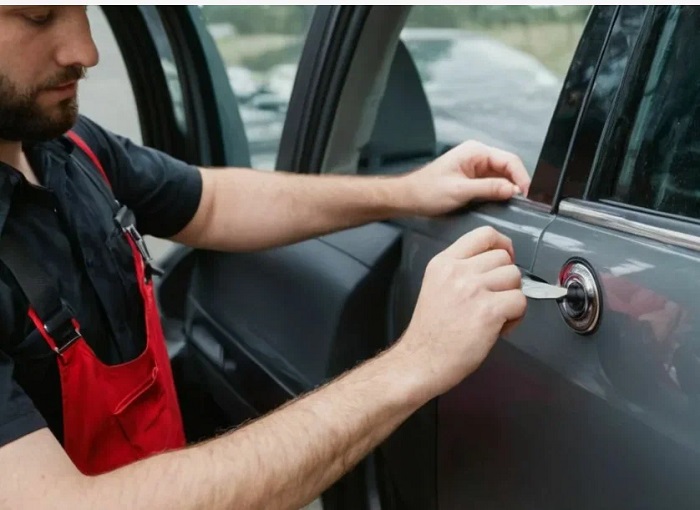
Car break-in is the process of gaining access to the interior or lock when the keys are lost, locked, the battery is dead, or the locking mechanism is faulty. It’s important to understand the difference between legal break-in (by the owner or on their behalf) and illegal entry: any work should only be performed with the right to the vehicle.
The main goal of safe break-in from car locksmith Vaughan is to minimize the risk of damage to the door, glass, seals, wiring, and electronics. Incorrect attempts to pry the door open or to pry the lock open with improvised objects often result in costly repairs that far exceed the cost of professional assistance.
When is break-in permitted and what documents should be prepared?
Before starting work, ensure you are acting legally: if necessary, call a specialist and prepare proof of ownership. Many services will not attempt to unlock the car without verifying identity and ownership.
- Situations: keys lost, keys inside the car, broken key/cylinder, lock not responding, battery dead and central locking not working, key fob/immobilizer malfunction.
- Documents: vehicle registration certificate/passport (or photo), driver’s license, power of attorney (if not the owner), proof of ownership from a carsharing/leasing service.
- Conditions: It is preferable to unlock the car in the presence of a witness or in a secure parking lot, especially in public places.
What to do before unlocking: quick checks
- Check for a spare key (at home, with a relative) and the possibility of delivery.
- Assess what is locked: doors, trunk, hood; Is the mechanical lock working or just the central lock?
- Rule out simple causes: a stuck key fob, a dead battery in the key, the locking mode is engaged, or the cylinder is icy.
- If the battery is dead, check if you can access the terminals under the hood or the external terminals for the jumper (some cars have them).
Summary: When is it permissible to open a car without keys and where are the boundaries?
Opening a car without keys is only permissible if there is a legal basis and the understanding that any unauthorized use of someone else’s property may be classified as an offense or a crime. In practice, confirmation of the right to access the car, the purpose of opening it, and the ability to prove good faith are decisive.
The safest way is to act through the owner, an authorized representative, a roadside assistance service, or a service that records the request and documents. If the situation is an emergency, it is important to minimize intervention, call competent services, and document the circumstances to avoid claims and liability.
Briefly on legal grounds and restrictions
Acceptable grounds usually boil down to the following cases:
- You are the owner or legal user (power of attorney, rental/leasing/car sharing agreement, company car) and can prove it.
- Emergency: threat to life/health (child/person/animal in the car, signs of heat stroke, suffocation), immediate danger (smoke, fire, leak, etc.).
- Actions of authorized persons: police, rescuers, towing services, representatives of the owner/lessor if legal procedures and grounds exist.
Restrictions that are important to observe:
- Do not open Use someone else’s vehicle without the owner’s express consent or legal authority, even “for a minute” and “in good faith.”
- Do not use methods that cause damage (damage to the lock, glass, or paintwork) unless absolutely necessary and legal assistance is available.
- Do not touch items inside the vehicle or move the vehicle without permission; the purpose must be strictly limited to access/eliminating the threat.
- Record the circumstances (calls to services, witnesses, photos/videos) and retain documents confirming the right and reason for the actions.