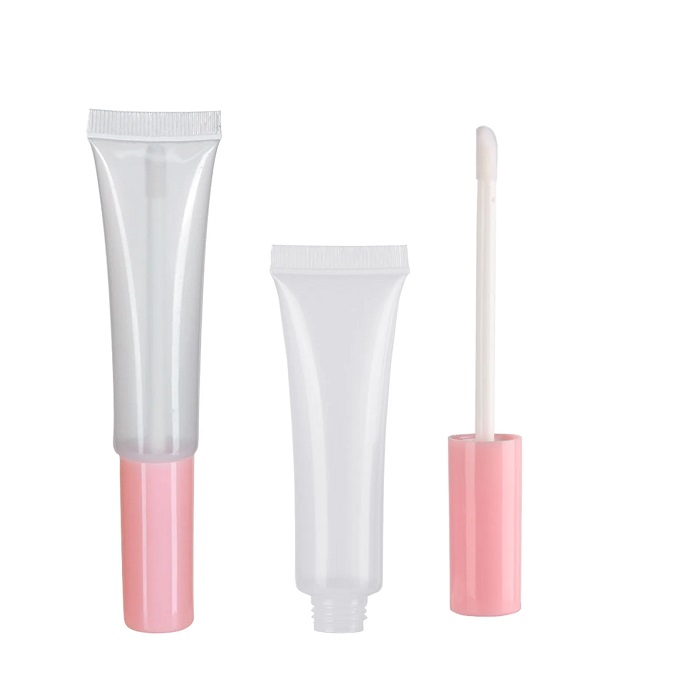
Private-label lip gloss allows beauty brands, salons, retailers, and online sellers to launch cosmetic products without developing every element from the beginning. However, the packaging still needs to reflect the brand, protect the formula, and provide a reliable user experience.
Empty lip gloss tubes may be purchased as stock packaging or customized with colors, logos, coatings, and specialty applicators. The correct choice depends on the formula, target market, order quantity, filling operation, and desired retail price.
Buyers should evaluate the tube as a complete dispensing system rather than selecting a container based only on its appearance.
Choosing the Container Style
Cylindrical lip gloss tubes are common because they are easy to fill, pack, and display. Square or rectangular packages offer a more distinctive shelf appearance but may be heavier and more expensive.
Double-wall containers use a separate inner bottle and decorative outer shell. This construction can create a thick, premium appearance, although it increases material use and freight weight.
Transparent packaging allows the gloss color to remain visible. Frosted or opaque containers may suit skincare-inspired treatments or luxury product ranges.
The selected capacity should match the commercial fill volume. Buyers must allow enough headspace for the wiper and applicator stem without creating unnecessary empty space.
Selecting the Applicator
Doe-foot applicators are widely used for standard glosses because the flocked surface collects and spreads the formula effectively.
Reservoir-style or paddle applicators carry more product and may cover the lips with fewer dips. Brush tips provide precision for thin oils, while silicone applicators offer a smooth, easy-to-clean surface.
The applicator must match the product concept as well as the formula. A large paddle may suit a high-shine gloss, while a narrow tip may be better for a concentrated lip treatment.
Stem length should also be checked. The applicator should reach the product near the bottom without pressing excessively against the container base.
Matching the Wiper to the Formula
The wiper sits inside the neck and removes excess product from the stem and applicator.
Its opening determines how much formula remains on the tip. A large opening may cause dripping or a messy neck. A small opening can remove too much product or create excessive resistance.
The same tube can perform very differently when used with another formula. Testing must therefore use the intended product rather than water or a generic sample liquid.
Materials and Compatibility
Lip gloss tubes commonly use PETG, PET, PP, ABS, acrylic, and combinations of these materials.
PETG provides clarity and impact resistance. Acrylic-style outer shells create a premium appearance, while PP is often used for caps, stems, and wipers.
Formula ingredients may interact with plastics or decorative coatings. Oils, fragrances, pigments, and solvents can cause swelling, stress cracking, discoloration, or peeling.
Buyers sourcingprivate label cosmetic packagingshould conduct compatibility and stability tests before confirming a commercial order.
Stock Packaging vs Custom Packaging
Stock tubes are usually the fastest and most economical option. The buyer selects an existing shape, capacity, cap, and applicator and then adds a label or simple logo.
Semi-custom packaging may use standard molds with custom colors, silk-screen printing, hot stamping, or cap finishes.
Fully custom packaging can include an exclusive bottle shape, cap, applicator, or decorative structure. It offers stronger differentiation but requires tooling investment, longer development time, and higher minimum quantities.
For many private-label startups, a standard mold with well-designed decoration provides the best balance between brand identity and cost.
Decoration Options
Common decoration methods include:
- Silk-screen printing
- Hot stamping
- Pressure-sensitive labels
- Frosted coatings
- Color spraying
- Gradient effects
- Metallized caps
- Embossed logos
The decoration must resist scratching, oils, and repeated handling. Premium finishes may require individual protective bags or trays during shipping.
The artwork should account for the container shape, printable area, cap alignment, barcode size, and regulatory information.
Filling and Assembly
Some private-label manufacturers fill and assemble the packaging, while others require the brand to work with a separate contract filler.
The filler should confirm that its equipment can handle the selected container. Filling nozzles, insertion systems, cap torque, and cleaning procedures may vary.
A pilot run can identify problems such as air pockets, product contamination around the neck, incorrect fill weight, or difficulty inserting the wiper.
Planning the Order
Before placing an order, confirm the MOQ, sample cost, decoration setup fees, production lead time, carton quantity, and shipping volume.
The buyer should retain approved samples and record every component code. These references make repeat orders more consistent.
Empty lip gloss tubes provide private-label brands with many customization opportunities, but the package must remain technically suitable for the formula. Careful component selection, physical testing, and documented approval help turn a standard container into dependable branded packaging.