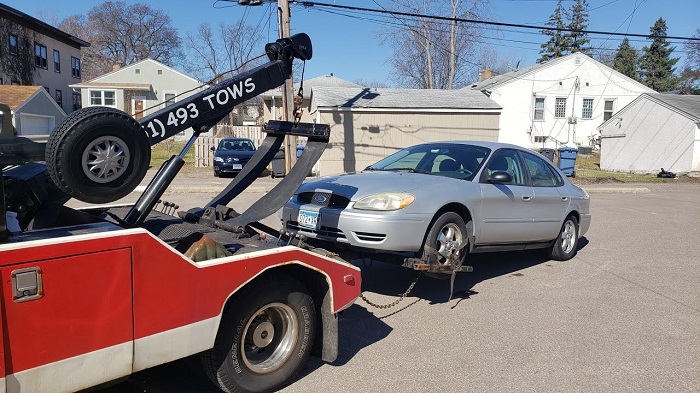
Vehicle towing may be necessary after an accident, a breakdown, improper parking, or when the vehicle needs to be taken to a repair shop without being able to drive itself. To avoid further damage and fines, it’s important to follow the rules and understand in advance which transportation method is appropriate for your situation.
Below are practical recommendations: how to prepare the vehicle, what to check before loading, what documents and details to consider, and how to reduce the risk of disputes with the towing service and keep the vehicle safe.
When towing is required and which method to choose
The towing method depends on the vehicle’s condition, drivetrain type, and damage. An incorrect choice can result in damage to the transmission, all-wheel drive clutch, suspension, or bumpers.
Main Options
- A flatbed tow truck (full load) is the safest and most versatile option, especially for vehicles with automatic transmissions, all-wheel drive, low ground clearance, and those in accidents.
- Partial load – suitable when full loading is impossible, but requires caution with the transmission and suspension.
- Cable towing – not always permitted and often limited by regulations and vehicle specifications; It is used for short distances and with properly functioning control systems and brakes.
- A rigid coupling is more stable than a cable, but it also has limitations and requires coordination between drivers.
How to choose correctly
- If it has an automatic/CVT/robot transmission, prioritize full loading.
- If it has all-wheel drive, full loading is preferable to avoid strain on the transmission.
- If the steering, suspension, or wheels are damaged, a platform and a proper winch are required.
- If the vehicle is lowered, notify us in advance so that a tow truck with suitable ramps can arrive.
Checking the grounds: parking restrictions, signs, and markings
Before towing a vehicle or contesting the towing, check whether here was a legal basis for the move: were the authorities in force? Prohibition signs, whether the markings were correct, and whether the location falls within a restricted area.
Errors in the application of signs, inconsistent markings, or the absence of required signs often become key arguments when investigating a case and seeking a refund.
What to check on-site and in the documents
- No stopping/parking signs: presence and visibility of the sign, direction of action, whether it is obscured by trees/advertisements, whether it was installed before the start of the restricted area.
- Signs (additional information): whether the prohibition applies to specific days/hours, installation method, zone of action (arrows), whether there are exceptions (e.g., for special vehicles).
- Markings: is there a yellow line at the edge of the roadway, is it appropriate for the location, and has it been worn out to the point of being illegible? Please note that in the event of a conflict, it is important to record both elements.
- Actual circumstances: distance to an exit/intersection, pedestrian crossing, public transport stop, courtyard entrance, fire escape; presence of an obstruction to traffic.
- Temporary restrictions: temporary signs during work, portable barriers, notices; Were they in effect at the time of parking?
- Paid parking zone/resident spaces: zone boundaries, signage accuracy, availability of information about payment rules and validity periods.
- Take a photo of your car in relation to the terrain, all signs along the route, markings, and a general street plan (so you can see where you were approaching from).
- Check the direction of the signs and plates: it is important that the prohibition may begin after the sign and end at the nearest intersection or as indicated by arrows.
- Compare the times: when you parked, when the towing began, whether hourly/daily restrictions were in effect.
- Save the documents: protocol/resolution, act of movement, receipts for towing and storage; They must specify the location, time, and reason.
Bottom line: the legality of an evacuation always rests on a specific basis—a valid ban, a correctly installed and legible sign, markings, and compliance with the designated area. The more accurately you document the signs, markings, time, and location, the easier it will be to confirm the legality of the evacuation or, in the event of violations, justify cancellation and refund.